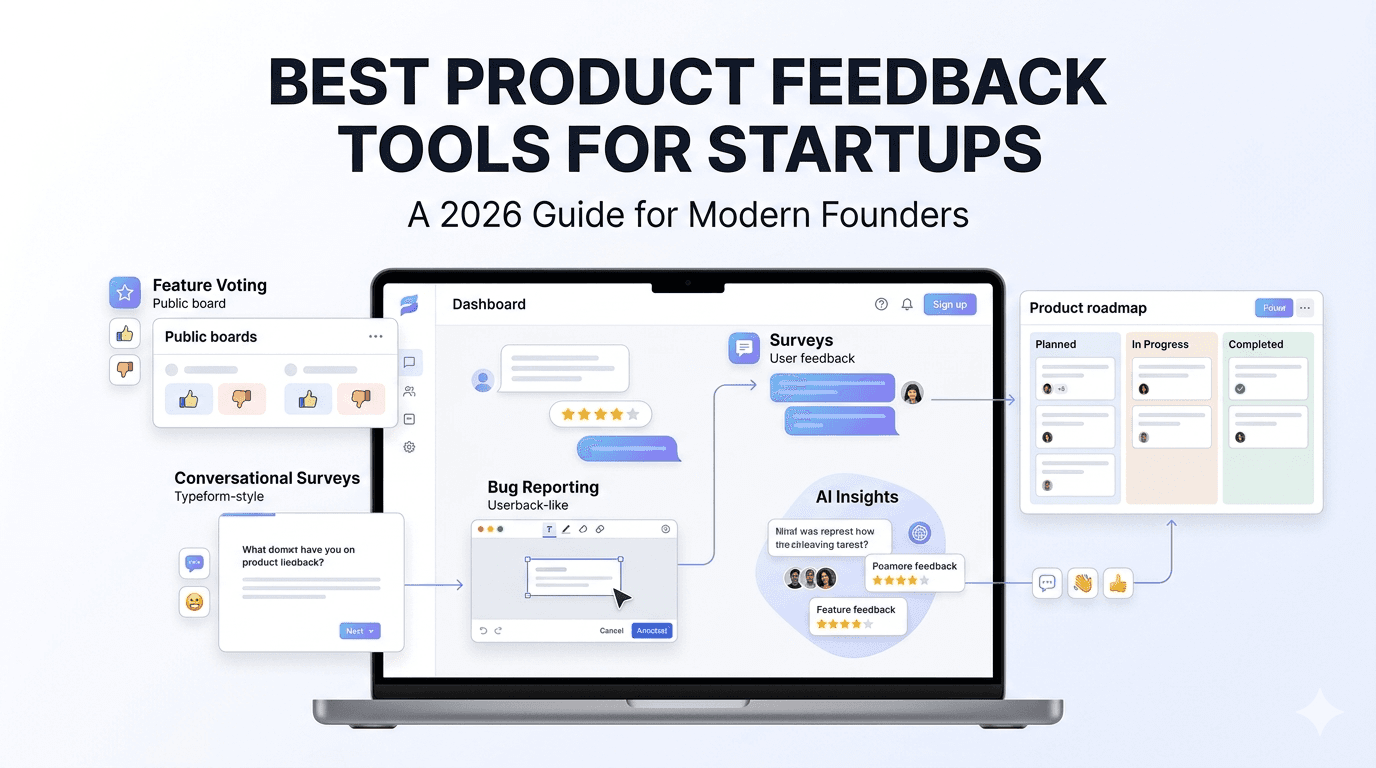
Introduction: Why Product Feedback Tools Are Essential for Startup Success
In the fast-paced world of startups, listening to your customers isn't just a nice-to-have—it's a survival strategy. The most successful startups understand that their users hold the key to product improvement, innovation, and market fit. Without proper feedback mechanisms, you're essentially building in the dark, hoping your assumptions align with customer needs. This is where product feedback tools become invaluable assets for any growing company.
Modern startups face unique challenges when collecting and managing feedback. Limited resources, rapidly evolving products, and the need to prioritize features that deliver maximum value make manual feedback collection methods inefficient and unreliable. According to recent studies, startups that implement structured feedback systems are 3 times more likely to achieve product-market fit and experience faster growth rates.
What Makes a Great Product Feedback Tool for Startups?
Before diving into specific tools, it's important to understand the criteria that matter most for early-stage companies. The ideal feedback tool for startups should:
- Be affordable and scalable: Startups need tools that grow with them without breaking the bank
- Integrate easily with existing workflows and other tools in your tech stack
- Provide actionable insights rather than just collecting data
- Engage users effectively to encourage participation and build community
- Offer clear prioritization features to help focus development efforts
The Core Features Every Startup Should Look For
When evaluating feedback tools, pay attention to these essential features:
- Centralized feedback collection: All feedback in one place, organized and searchable
- Voting and prioritization systems: Let users vote on features they want most
- Roadmap transparency: Show users what you're working on and what's coming next
- User segmentation: Understand feedback from different user groups
- Analytics and reporting: Track trends and measure feedback impact
- Integration capabilities: Connect with your CRM, project management, and communication tools
Top Product Feedback Tools for Startups in 2026
1. Idealoop: The Customer-Driven Product Management Platform
Ideal for: Startups focused on building customer-centric products with community engagement
Idealoop stands out as a comprehensive solution designed specifically for startups and growing companies. Unlike generic feedback tools, Idealoop understands the unique needs of early-stage businesses and provides features that help turn user feedback into product improvements efficiently.
Key Features:
- Customizable feedback boards that match your brand
- Advanced voting and commenting systems
- Automated feedback categorization and tagging
- Public roadmap with status updates
- Integration with Slack, Jira, and other popular tools
- User segmentation and analytics dashboard
Why it's great for startups: Idealoop offers flexible pricing plans that scale with your growth, making it accessible even for bootstrapped startups. The platform's intuitive interface requires minimal setup time, allowing your team to start collecting valuable feedback immediately.
2. Canny: For Feature Request Management
Ideal for: Startups that need robust feature request tracking and prioritization
Canny has established itself as a popular choice among startups for managing feature requests. The platform excels at helping product teams understand what features users want most and why.
Key Features:
- Feature request boards with voting
- Changelog to keep users informed
- User segmentation and feedback analysis
- Integration with Intercom and other support tools
3. Upvoty: Simple and Effective Feedback Collection
Ideal for: Startups looking for a straightforward, easy-to-implement solution
Upvoty offers a clean, simple approach to feedback collection that's perfect for startups that want to get started quickly without complex configurations.
Key Features:
- Feedback boards with voting and commenting
- Roadmap and changelog features
- Basic analytics and reporting
- Custom domain and branding options
4. Productboard: Comprehensive Product Management
Ideal for: Well-funded startups needing a complete product management solution
While more comprehensive (and expensive) than other options, Productboard offers end-to-end product management capabilities that include robust feedback collection and analysis features.
Key Features:
- Centralized customer insights repository
- Advanced prioritization frameworks
- Roadmapping and release planning
- Integration with numerous development and support tools
How to Choose the Right Tool for Your Startup
Selecting the perfect feedback tool depends on several factors unique to your startup:
Consider Your Budget and Growth Stage
Early-stage startups with limited funding should prioritize affordability and essential features. As you grow, you can upgrade to more comprehensive solutions. Idealoop's tiered pricing model makes it particularly attractive for startups at different growth stages.
Evaluate Your Team's Technical Capabilities
Some tools require more technical setup and maintenance than others. Consider your team's bandwidth and technical expertise when choosing a platform. Tools like Idealoop and Upvoty are designed for easy implementation with minimal technical overhead.
Assess Your Integration Needs
Look at your current tech stack and identify which integrations are essential. Most modern feedback tools offer integrations with popular platforms, but the depth and quality of these integrations vary.
Think About User Experience
The tool should be easy for both your team and your users. Complicated interfaces can discourage participation and reduce the quality of feedback you receive.
Best Practices for Implementing Product Feedback Tools
Start Small and Scale
Begin with a focused approach—collect feedback on specific features or areas rather than trying to capture everything at once. This allows you to refine your process before scaling up.
Engage Your Community
Actively encourage users to participate in your feedback system. Consider offering incentives, highlighting user contributions, and showing how feedback leads to real product improvements.
Close the Feedback Loop
Always follow up with users who provide feedback. Let them know when their suggestions are being considered, implemented, or why they might not be prioritized. This builds trust and encourages continued participation.
Integrate Feedback into Your Development Process
Make feedback review a regular part of your product development cycle. Tools like Idealoop make this easy by providing clear prioritization and integration with project management systems.
Conclusion: Building Better Products Through Customer Feedback
Choosing the right product feedback tool is one of the most important decisions a startup can make. The right platform not only helps you collect valuable insights but also builds stronger relationships with your users and creates a more customer-centric product development culture.
While there are several excellent options available, Idealoop stands out as a particularly strong choice for startups due to its balance of powerful features, ease of use, and startup-friendly pricing. By implementing a structured feedback system early in your journey, you'll be better equipped to make data-driven decisions, prioritize effectively, and build products that truly resonate with your target market.
Remember, the goal isn't just to collect feedback—it's to create a continuous conversation with your users that drives product excellence and business growth. Start today, and watch how customer-driven development transforms your startup's trajectory.