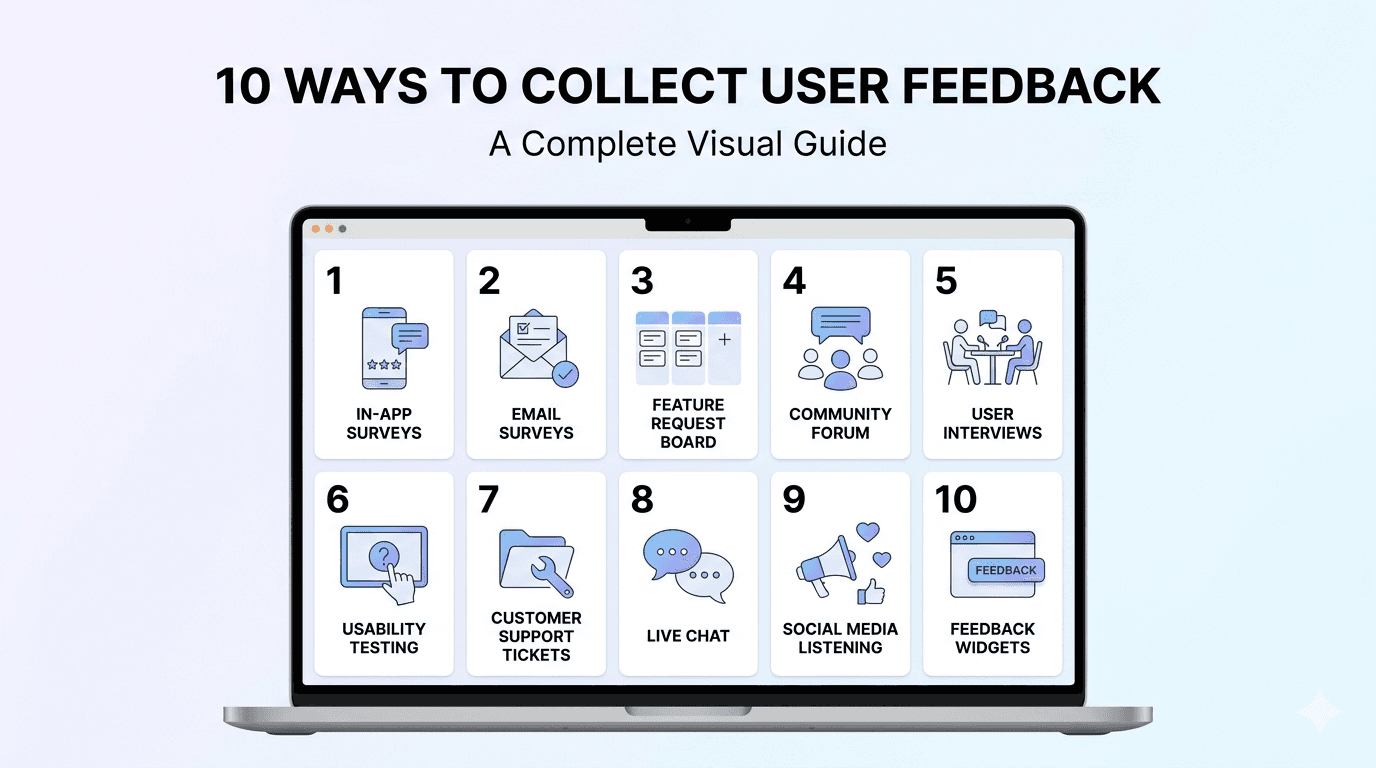
10 Ways to Collect Feedback From Your Users
In today's competitive SaaS landscape, user feedback isn't just nice to have—it's essential for growth and retention. Whether you're building a new feature or refining an existing one, understanding what your users want can make the difference between a product that thrives and one that stagnates. At Idealoop, we specialize in helping teams collect, organize, and act on user feedback efficiently. In this comprehensive guide, we'll explore 10 effective methods to gather valuable insights from your users, ensuring your product evolves in alignment with their needs.
1. In-App Feedback Widgets
One of the most direct ways to collect feedback is through in-app feedback widgets. These tools allow users to share their thoughts without leaving your application. By integrating a widget like Idealoop's, you can capture real-time insights while users are actively engaged with your product. This method reduces friction and increases the likelihood of receiving actionable feedback.
- Benefits: High engagement rates, context-rich feedback, and immediate user sentiment.
- Best Practices: Place widgets strategically on key pages, keep forms short, and offer multiple feedback types (e.g., bug reports, feature requests).
2. Customer Surveys
Surveys are a versatile tool for gathering structured feedback. You can use them to measure satisfaction (e.g., NPS surveys), understand user demographics, or dive deep into specific features. With Idealoop, you can create and distribute surveys seamlessly, analyzing results to identify trends and priorities.
- Types: Post-interaction surveys, periodic satisfaction polls, and targeted feature feedback.
- Tips: Keep surveys concise, use clear questions, and incentivize participation when possible.
3. User Interviews
For qualitative insights, nothing beats one-on-one user interviews. These sessions allow you to explore user motivations, pain points, and experiences in depth. While time-intensive, interviews can uncover nuances that quantitative methods might miss. Idealoop helps schedule and record interviews, making it easier to synthesize findings across your team.
- When to Use: Early in product development, during major updates, or to validate hypotheses.
- Key Questions: Ask about workflows, challenges, and desired improvements.
4. Feedback Forums and Boards
Creating a dedicated space for user discussions, like a feedback forum, encourages community engagement. Platforms like Idealoop offer public or private boards where users can submit ideas, vote on suggestions, and see what others are requesting. This transparency builds trust and helps prioritize features based on popular demand.
- Advantages: Crowdsourced insights, user collaboration, and visible roadmap alignment.
- Setup: Categorize topics, moderate discussions, and regularly update users on progress.
5. Social Media Monitoring
Users often share feedback on social media platforms like Twitter, LinkedIn, or Reddit. By monitoring these channels, you can catch unsolicited opinions and engage directly with your audience. Tools integrated with Idealoop can aggregate social mentions, helping you track sentiment and respond promptly.
- Channels: Focus on platforms where your users are most active.
- Action Steps: Set up alerts, participate in conversations, and document feedback for analysis.
6. Email Campaigns
Email remains a powerful channel for soliciting feedback. Send targeted campaigns to user segments, such as new sign-ups, long-term customers, or those who've recently used a specific feature. With Idealoop's email integration, you can automate these campaigns and link responses directly to your feedback management system.
- Strategies: Use personalized subject lines, include clear CTAs, and offer rewards for completion.
- Metrics: Track open rates, click-through rates, and feedback quality.
7. Usability Testing
Observing users as they interact with your product can reveal usability issues and opportunities for improvement. Conduct remote or in-person testing sessions to see how users navigate your interface. Idealoop supports logging test results, making it easy to correlate feedback with user actions.
- Methods: Task-based tests, A/B testing, and heatmap analysis.
- Outcomes: Identify friction points, validate design choices, and enhance user experience.
8. Support Ticket Analysis
Customer support interactions are a goldmine of feedback. Analyze tickets to spot recurring issues, feature requests, or satisfaction levels. By integrating Idealoop with your support software, you can categorize and prioritize this feedback alongside other sources.
- Process: Tag tickets by theme, track resolution times, and share insights with product teams.
- Benefits: Proactive problem-solving and improved customer service.
9. Beta Testing Programs
Invite users to beta test new features before full release. This not only gathers feedback but also builds a sense of ownership among participants. Idealoop facilitates beta program management, from recruitment to feedback collection and iteration.
- Recruitment: Target engaged users or specific demographics.
- Feedback Loops: Provide clear guidelines, collect structured feedback, and iterate quickly.
10. Analytics and Behavioral Data
Quantitative data from analytics tools (e.g., Google Analytics, Mixpanel) complements qualitative feedback. Track metrics like feature usage, drop-off rates, and engagement patterns to infer user preferences. Idealoop can integrate with these tools, helping you connect behavioral data with direct feedback.
- Key Metrics: User retention, conversion rates, and feature adoption.
- Insights: Identify underused features, optimize workflows, and validate feedback trends.
Conclusion
Collecting user feedback is a multifaceted process that requires a blend of tools and strategies. By implementing these 10 methods—from in-app widgets to beta testing—you can build a robust feedback system that drives product innovation. Idealoop streamlines this process, centralizing feedback from various channels and empowering your team to make data-driven decisions. Start leveraging these techniques today to create a product that truly resonates with your users.